
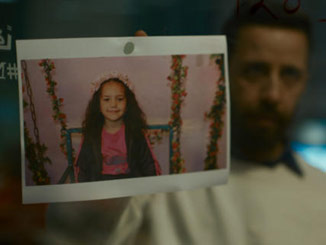
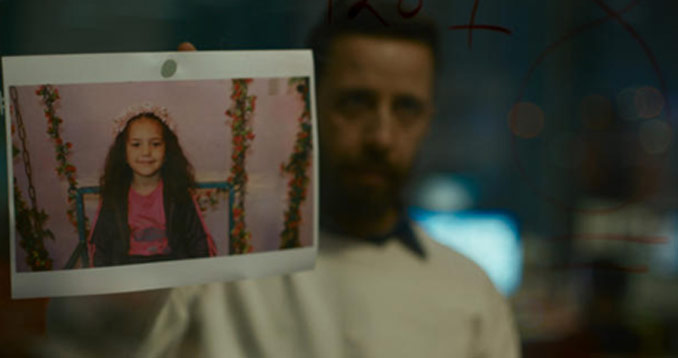
The Voice of Hind Rajab is a dramatization and visualization sound files of the Voice of Hind Rajab during phone conversations at a Red Cresent call centre from a car caught in a brutal Israeli attack in Gaza.
A call comes into Omar’s call centre line, a woman screaming, “They are shooting at us!” A hail of fire. The call ends. Omar soon learns that a 6-year-old girl is still alive in the car.
Hind is not just trapped in the car — she’s trapped in time, in history, in headlines, in the audio that materializes on-screen like a line of digital razor wire and charges the film with an unceasing current of emotional voltage.
The film’s final turn is once the recording runs out and Hind’s voice can no longer be heard strips away all narrative padding and grants her mother a place to memorialize her grief. This time, the view of the horizon and sea is clear.
This isn’t filmmaker Ben Hania’s first time refracting reality through the lens of performance: In the Oscar-nominated experimental 2023 documentary Four Daughters, she integrated actors into the household of a Tunisian mother and her two youngest daughters to play her missing eldest two daughters, who left to join Daesh fighters in Libya. The film tells a multidimensional story of loss, where memory is both honored and exposed as futile.
The film has won a number of film festival awards and It has been selected as the Tunisian entry for the Best International Feature Film at the 98th Academy Awards, making the December shortlist. At the 83rd Golden Globe Awards, it was nominated for Best Non-English Language Film.